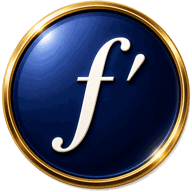
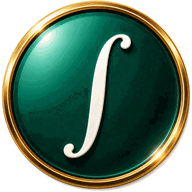
Let . Find a function so that obeys the partial differential equation
Q1Stage 1
Hint
Just evaluate and and stare at them for a while.
Answer
Full solution
We start by evaluating and when .
So
For this to equal , we need .

Partial Derivatives
14 problems · hints, answers and solutions shown beside each one
Do you understand the idea? Usually little or no calculation.
Let . Find a function so that obeys the partial differential equation
Just evaluate and and stare at them for a while.
We start by evaluating and when .
So
For this to equal , we need .
Find all functions that obey the partial differential equation
Let be a given function. Find all functions that obey the partial differential equation
(a), (b) Fix any and set . What is ?
(a) with being any function of the single variable .
(b) where is any function obeying (i.e. any antiderivative of ) and is any function of the single variable .
(a) Fix any and set . Then
So, for each fixed , , which is a function of , has to be a constant. The constant may be different for each different choice of . So with depending only on , not on . Or, renaming back to , with being any function of the single variable .
(b) Fix any and set . Then
In words, has to have derivative , i.e. be an antiderivative of . So if is any function whose derivative is , i.e. if is any antiderivative of , then, for each fixed , , with being a constant. The constant may be different for each different choice of . So with depending only on , not on . Or, renaming back to , with being any antiderivative of and being any function of the single variable .
Practising the skill itself, until applying it is automatic.
Solutions of Laplace's equation are called harmonic functions. Which of the following functions are harmonic?
(a), (d) and (e) are harmonic. (b) and (c) are not harmonic.
(a) If , then
So and is harmonic.
(b) If , then
So is not identically zero and is not harmonic.
(c) If , then
So is not identically zero and is not harmonic.
(d) If , then
So and is harmonic.
(e) If , then
So
and is harmonic.
Let where is a constant. Find such that .
Just substitute the given into the given PDE.
We evaluate both sides of the given PDE with . Since
the left hand side of the PDE is
and the right hand side of the PDE is
The left and right hand sides are equal if and only if
Let where is a constant. Find all 's such that
Just substitute the given into the given PDE.
We evaluate with . Since
We have
This is zero (for all , , ) if and only if
Let where and are constants. Find all 's and 's such that .
Just substitute the given into the given PDE.
, for any real number .
We evaluate both sides of the given PDE with . Since
the left hand side of the PDE is
and the right hand side of the PDE is
The left and right hand sides are equal if and only if
Let be any differentiable function of one variable. Define . Is the partial differential equation
necessarily satisfied? You must justify your answer.
Just substitute the given into the given PDE.
Yes it is. For the justification, see the solution.
We simply evaluate the two terms on the left hand side when . By the chain rule,
So
and really does solve the PDE for any differentiable function .
Let . Find all functions such that .
Substitute the given into the given PDE. Review Theorem 3.3.2 in the CLP-1 text.
with being an arbitrary constant.
We evaluate both sides of the given PDE with . Since
the left hand side of the PDE is
and the right hand side of the PDE is
The left and right hand sides are equal if and only if
This is the type of ordinary differential equation that we studied in Section 3.3, on exponential growth and decay, in the CLP-1 text. We found in Theorem 3.3.2 there that the general solution to this ODE is with being an arbitrary constant.
Let and both be solutions of the wave equation and let and be constants. Show that is also a solution of . Because of this property, the wave equation is said to be a linear PDE.
See the solution.
Let and obey and . Then obeys
as desired.
Let be a harmonic function. That is, obeys . Let , , , be constants. Show that if the vectors and have the same length and are mutually (fill in the missing word), then is also a harmonic function.
Evaluate for the given .
perpendicular
We evaluate with . Since, by the chain rule,
we have
If , i.e. if and have the same length, then the first line of the right hand side is zero, since .
If , i.e. if and are mutally perpendicular, then the second line of the right hand side is zero.
So if and have the same length and are mutally perpendicular, then . The missing word is “perpendicular”.
Further than practice: several ideas at once, or an unfamiliar situation.
The distance from the point to the origin is
Find all functions , with being a real constant, that obey Laplace's equation
for all .
In preparation for substituting into the PDE, we compute , and .
So
This is zero if and only if
In this question we are going to find all solutions to the PDE
that are of the special form , with, for simplicity, and . We will use a technique called “separation of variables”.
Show that , with and nonzero, obeys the PDE if and only if
Show that if and only if there is a constant such that
Find the general solutions to and with .
(b) The left hand side is independent of and the right hand side is independent of .
(c) Review Section 3.3 in the CLP-1 text and Section 2.4 in the CLP-2 text.
(a), (b) See the solutions.
(c) , , with , and being arbitrary positive constants.
(a) Substituting into the given PDE yields
Then dividing both sides by gives
as desired.
(b) The left hand side is independent of , and the right hand side is independent of . The left and right hand sides are equal to each other, so both are independent of both and , i.e. are constant. If we call the constant , then
(c)
The equation is the type of ordinary differential
equation that we studied in Section 3.3,
on exponential growth and decay, in the CLP-1 text. We found in
Theorem 3.3.2 there that the general solution
to this ODE is with
being an arbitrary constant, which we require to be positive to make .
The equation is a separable ODE. We studied such ODE's in Section 2.4 in the CLP-2 text. To solve it, we divide across by , giving
So
solves the PDE for .
Suppose that obeys the PDE
where and are given functions. Let be a curve (Such curves are called characteristics of the PDE.) in the -plane that obeys
Show that is constant along that curve. That is, show that is independent of .
Evaluate .
See the solution.
By the chain rule,
But evaluating at , gives
so
Suppose that obeys the PDE . Define . Find a PDE that obeys.
Suppose that obeys the PDE . Define . Find a PDE that obeys.
Evaluate .
(a) (b)
(a) Suppose that obeys the PDE
Define . Then, by the chain rule,
(b) Define . Then, by the chain rule,
Now notice that if , then, evaluating at and gives
So
From the UBC Math 200 open textbook project, © Joel Feldman, Andrew Rechnitzer, Elyse Yeager and others. Licensed CC BY-NC-SA 4.0; this HTML adaptation is released under the same licence. Full attribution.