Applications of the Derivative · Topic 16 of 23
Monotonicity, Concavity and the Derivative Tests
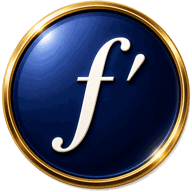
The sign of says where the graph rises or falls; the sign of says which way it bends. Build one sign chart for each: a sign change of at a critical number is a local maximum or minimum, and a sign change of at a point of the graph is an inflection point.
Key ideas
5 things to remember- 1
The sign of gives direction
on an interval means is increasing there; means decreasing. Monotonicity is a statement about an interval, so report the intervals one at a time — never joined with .
- 2
Critical numbers are only candidates
is critical when is in the domain of and or does not exist. Every interior extremum sits at a critical number, but at shows the converse fails.
- 3
First Derivative Test: the sign must change
At a critical number where is continuous: going to is a local maximum, to a local minimum, and no change means no extremum. It still works at corners and cusps.
- 4
bends; inflection is a sign change
is concave up, concave down; an inflection point is where the concavity actually changes at a point of the graph. Bending says nothing about direction: falls while concave up on .
- 5
Second Derivative Test can say nothing
With : gives a local minimum, a local maximum, and gives no information at all — , and all land there. Fall back on the First Derivative Test.
Formulas
What to have memorisedIncreasing / decreasing test
must be an interval — a union across a gap in the domain proves nothing.
Critical number
Candidates only: every interior extremum is critical, not every critical number is an extremum.
First Derivative Test
No sign change means no extremum; must be continuous at .
Concavity test
Concave up is how the graph bends, not whether it rises.
Second Derivative Test
gives no information — go back to the First Derivative Test.
Inflection point
Candidates: or undefined. A zero alone proves nothing.
Mean Value Theorem (the engine)
Both sign tests are corollaries: the sign of fixes the sign of .
Run the two sign charts
The steps, in order- 1
State the domain first and mark every excluded point on the number line — it splits the chart but is never a critical number.
- 2
Differentiate, put over one denominator and factor completely. Critical numbers: or undefined, with in the domain.
- 3
Read the sign of on each open interval by multiplying factor signs. A factor to an even power never flips the sign.
- 4
Classify each critical number by the change: to local maximum, to local minimum, no change no extremum.
- 5
Repeat with : candidates are where or is undefined; a genuine change of sign at a point of the graph is an inflection point.
- 6
Report location and value separately: local maximum value at ; inflection point .
Watch out
The mistakes that cost marks✗ Wrong
is zero at , so has an extremum there.
✓ Right
never flips the sign, so on both sides of : no extremum.
Why: only makes a candidate; the sign has to change.
✗ Wrong
, so is increasing.
✓ Right
says is increasing — the graph is concave up, rising or not.
Why: on is concave up and decreasing.
✗ Wrong
, so is an inflection point.
✓ Right
Check that changes sign at before calling it one.
Why: for : concave up on both sides, no inflection.
✗ Wrong
, so the Second Derivative Test says is not an extremum.
✓ Right
The test says nothing at all; classify with the First Derivative Test.
Why: , and all have with three different outcomes.
✗ Wrong
is a critical number of .
✓ Right
is not in the domain: it splits the sign chart but is never critical, and never an inflection point.
✗ Wrong
is increasing on .
✓ Right
is increasing on and increasing on — two statements.
Why: For the union claim is false: .
Quick check
Commit to an answer before you reveal one- Q1easy
Let . Find the intervals of increase and decrease, and use the First Derivative Test to locate and classify every local extremum.
Hint
Factor the derivative completely before you read any signs.
Show answer
Answer
Increasing on and , decreasing on ; local maximum value at , local minimum value at .
Steps
, so the critical numbers are and .
Signs: , , — so is across , , .
to at : local maximum, . to at : local minimum, .
Check with : and .
- Q2easy
Determine the intervals of concavity of and give the coordinates of every inflection point.
Hint
Concavity is controlled by , not — and the sign must actually change.
Show answer
Answer
Concave down on , concave up on ; the only inflection point is .
Steps
and , so is the only candidate.
and : concave down on , concave up on . The sign genuinely changes and is continuous, so gives an inflection point, with .
Note : an inflection point needs no horizontal tangent, and is not a critical number.
- Q3medium
Let . Find every critical number and classify it, using the Second Derivative Test where it works and the First Derivative Test where it does not. Then find all inflection points.
Hint
One critical number makes vanish — that is a signal to switch tests, not an answer.
Show answer
Answer
Local maximum at ; local minimum at ; no extremum at . Inflection points , and .
Steps
and . Critical numbers: .
: local maximum . : local minimum . is inconclusive, so use : on and on — no sign change, no extremum at .
at and changes sign at all three, so all three are inflection points: , and is odd.
- Q4medium
Let . State the domain, then find the intervals of increase and decrease, every local extremum, the intervals of concavity and every inflection point.
Hint
Mark the excluded point first: changes sign there, does not.
Show answer
Answer
Domain ; decreasing on and , increasing on ; local maximum value at and no local minimum; concave down on and , concave up on ; inflection point .
Steps
Domain: . That point splits every chart but is not a critical number.
The only critical number is . Signs: , , . So to at : local maximum .
, so has the sign of , and .
- Q5medium
Find constants and so that has a local maximum at and an inflection point at , then verify that your really has both features.
Hint
Each requirement becomes an equation; both are only necessary conditions, so the check is compulsory.
Show answer
Answer
, , giving : local maximum value at , inflection point .
Steps
and .
Inflection at forces , so . A local maximum at the interior point forces , so and .
Verify: and . Then with , a local maximum of value ; and changes sign at , so is an inflection point.
- Q6hard
is twice differentiable on with .
(a) Find the critical numbers and the intervals of increase and decrease, and classify each critical number. (b) Find every at which has an inflection point. (c) Why can you not give the -coordinates?
Hint
Factor the bracket as a difference of squares; for (b) put .
Show answer
Answer
(a) Critical numbers ; increasing on and , decreasing on ; local maximum at , local minimum at , neither at . (b) and . (c) is determined only up to an additive constant.
Steps
(a) , so and the critical numbers are . The even factor never flips the sign, so has the sign of : . Hence a local maximum at , a local minimum at , and only a horizontal tangent at .
(b) With , , so , zero at — that is and — and each is a genuine sign change.
(c) Every has the same .
On the exam
How this topic is markedMarks are for the chart, not the verdict: show the factored , the split points including any excluded from the domain, the sign on each interval, then the conclusion in words.
Keep location and value apart — write "local maximum value at " and "inflection point ", never "maximum at ".
If at a critical number, do not write "no extremum": say the Second Derivative Test is inconclusive and finish with the First Derivative Test.
Keep going
Read next
Stuck on this topic?
One session with a tutor who teaches it every term usually settles it.
Book a session