
Running Out of Page Space Can Break Your Reasoning
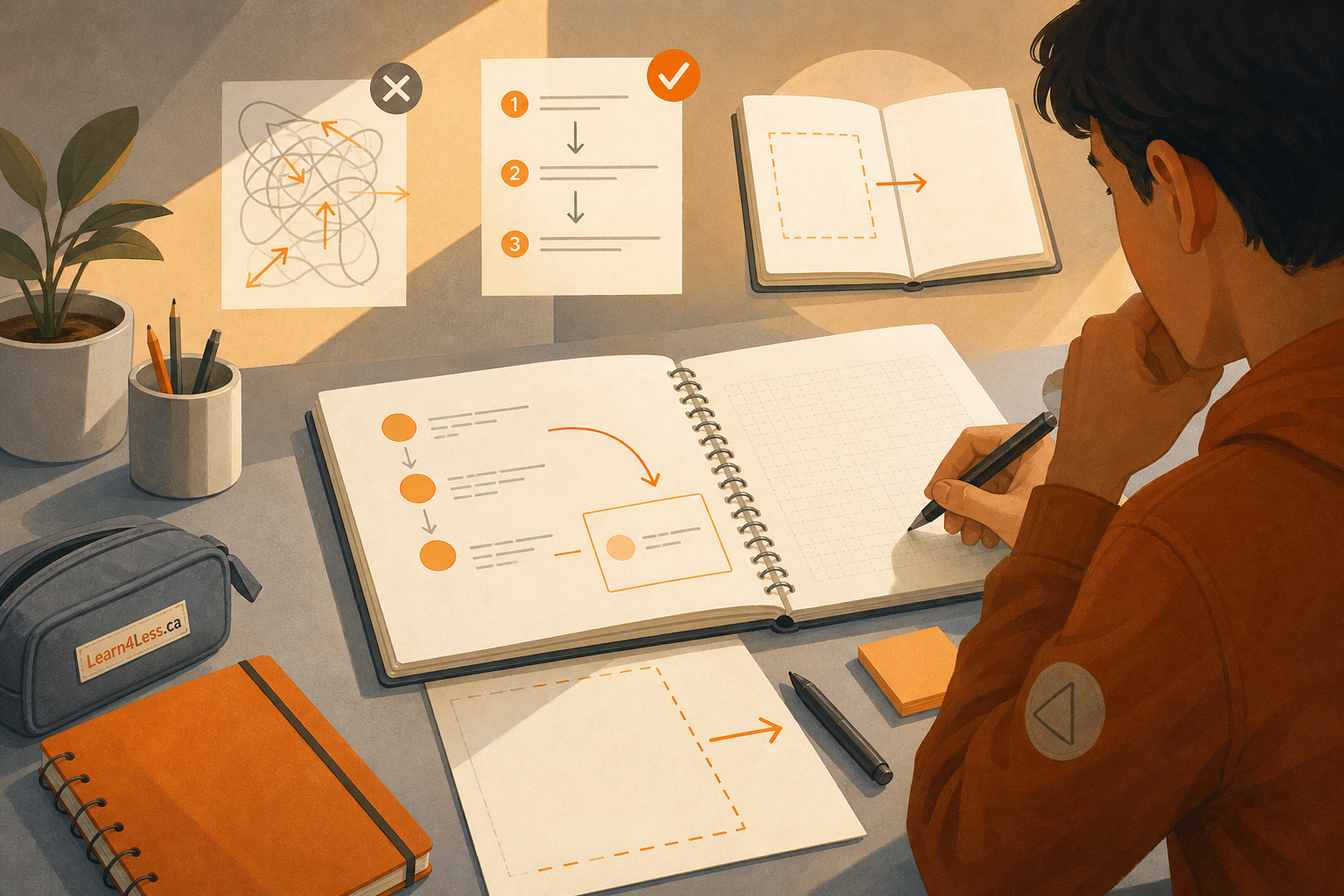
You’re halfway through a tough calculus problem on your homework or a test. You’ve written out the first few steps, but suddenly your work is creeping toward the edge of the page. The lines are getting smaller, you’re squeezing fractions into the margin, and you realize: you’re out of space, but the problem isn’t finished. Do you start over? Draw arrows? Keep cramming? Will your teacher even be able to follow what you wrote?
This situation is more common than most people admit—especially under time pressure. But running out of space isn’t just about neatness. It can cost you points if your answer is unclear, and it can make it much harder to check your work or spot mistakes. Fortunately, there are strategies to handle this in the moment, and ways to avoid it next time.
Why Running Out of Space Matters More Than You Think
At first, it might seem like a minor annoyance. But the way your solution fits on the page affects much more than presentation:
- Clarity for graders: If your work is jumbled or arrows point all over, the person marking it might miss steps or misunderstand your logic.
- Self-checking: It’s harder to scan back for errors if your work is scattered or cramped.
- Stress: Realizing you’re out of room can break your focus and make you rush the rest of the problem.
A cramped, messy page can turn a correct solution into lost points—or make it impossible for you to catch a calculation slip.
What To Do When You Run Out of Space (In the Moment)
If you’re in the middle of a problem and suddenly out of room, here are practical moves you can make right away:
-
Draw a clear arrow and continue on a new section or page.
- Use a bold arrow or “continued below/next page” note. Number your continuation if possible (e.g., “Problem 3, continued”).
- This is much better than squeezing into margins. Most teachers would rather see a clear continuation than a cramped mess.
-
Box or underline your last step before the break.
- This helps both you and your grader see where the solution picks up.
-
Don’t erase everything and start over unless absolutely necessary.
- Unless you made a major logic error, it’s usually not worth the lost time. A clear continuation is almost always acceptable.
-
If allowed, use extra sheets or the back of the page.
- On many assignments or exams, you can use the reverse side or request more paper. Just label clearly.
-
If you have to squeeze, keep vertical alignment.
- If you must write smaller, try to keep steps lined up in columns rather than zig-zagging across the page. This preserves some readability.
How to Prevent Space Problems Next Time
While the tips above are for emergencies, there are habits that can keep you from running out of space in the first place:
1. Scan the Problem Before Writing
Before you start, take 10 seconds to estimate how long the solution might be. For multi-step problems (especially in calculus or algebra), leave at least half a page, or start on a fresh sheet if possible. This small pause can save you from getting boxed in later.
2. Write Bigger Than You Think You Need
It’s tempting to write small to “save space,” but this often backfires. Larger writing leaves room for corrections and makes it easier to read. If you need more space, it’s better to continue on another page than to cram everything in tiny print.
3. Use Vertical Structure
Keep your steps lined up vertically as much as possible. For equations, align equal signs, and for multi-line calculations, keep each operation on a new line. This not only helps with space but also with clarity and error checking.
4. Start Each Problem on a New Page (If Possible)
For homework or practice, this is easy. For exams, you might not have unlimited pages, but at least start each major question in a new section or large block of space. This habit also helps distinguish your solutions for graders.
5. Leave Gaps for Later Steps
If you know you’ll need to come back and fill in steps (such as plugging in a value or writing a concluding statement), leave a blank line or two. This gives you flexibility if you need to add something without crowding.
What If You Already Have a Messy Solution?
Sometimes you only realize the problem after you’ve finished. If your work is already cramped, here’s how to salvage it:
- Underline or highlight key steps so the grader can follow your logic.
- Write a summary statement at the end—e.g., “Therefore, is the solution.” This helps clarify your final answer.
- On assignments, rewrite the solution on a clean page if you have time. For exams, do not erase; just add a note like “See continuation above.”
Two Common Traps (And How to Avoid Them)
Trap 1: Squeezing in “Just One More Step”
It’s tempting to fit one last calculation before you run out of room. But this almost always leads to illegible work or mistakes. Instead, move to a new space as soon as you see you’re getting close to the edge.
Trap 2: Arrows Everywhere
If you find yourself drawing multiple arrows, circles, or connecting lines, your work is probably too tangled. Limit yourself to one clear continuation per problem. If you have to jump around more, label each section (“Step 1”, “Step 2”) so the order is obvious.
A Simple Way to Check Your Work When Space Is Tight
If you’re reviewing your solution and space is tight, try reading your steps backward—from the answer to the question. This forces you to check each step for logical flow, even if the layout is awkward. If you get lost, that’s a sign the grader will too.
What If You Lose Points for Messy Work?
If your teacher deducts points for unclear or scattered work, ask politely what you could do differently next time. Most are happy to clarify their expectations. In future assignments or exams, apply the tactics above and show you’re making an effort to organize your work.
Final Thoughts
Running out of space happens to everyone, even experienced students. What matters is how you handle it in the moment and what habits you build to prevent it. Clear labeling, vertical alignment, and a willingness to continue work on a new page can make a big difference for both your understanding and your grades.
If you’re looking for more practical study strategies or want feedback on your written solutions, Learn4Less can help—but you can make real progress on your own with these small changes. Keep practicing, and remember: clarity is always more important than squeezing everything onto one page.
Summary
You’re halfway through a tough calculus problem on your homework or a test.