Calculation Errors Are Easier to Catch With a System
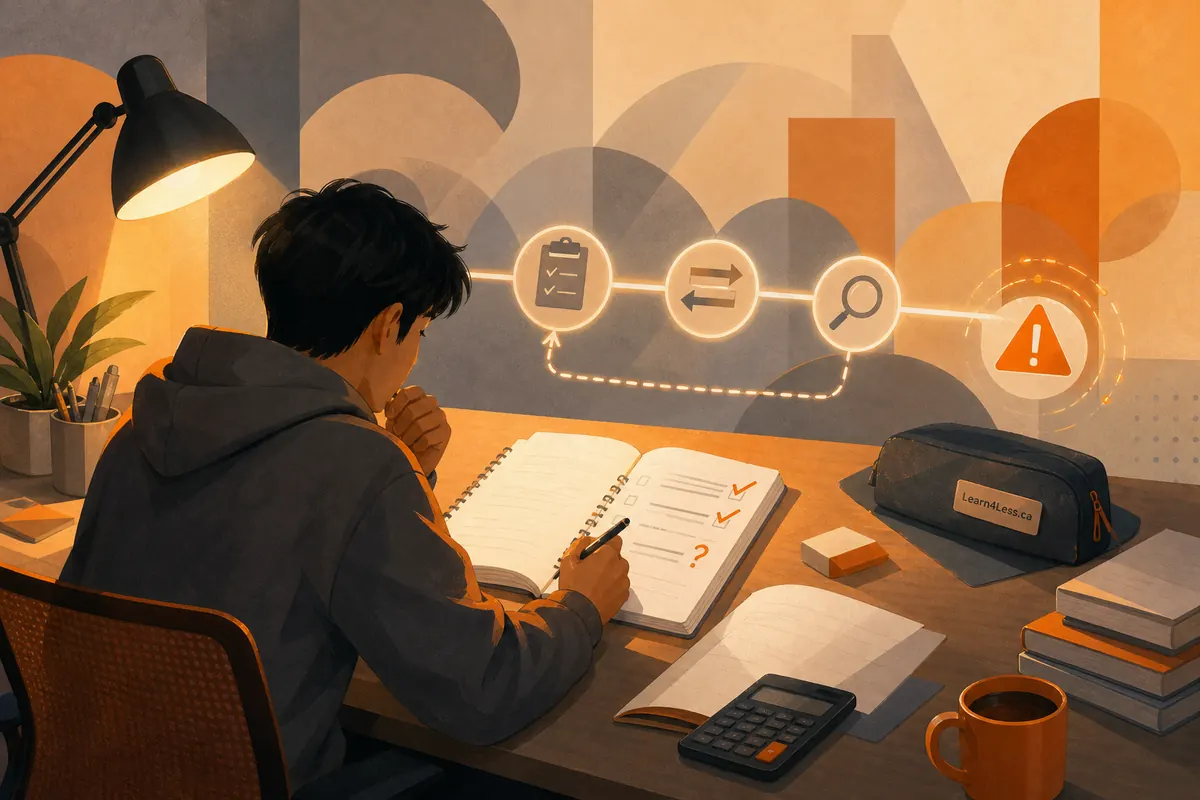
You’ve just finished a long set of math problems. Maybe it’s midnight, and you’re staring at your answers, wondering if you’ve made some small calculation slip that will cost you points. You don’t have time to redo every question from scratch, but you want to catch any obvious errors before you submit. Is there a way to reliably spot calculation mistakes without reworking everything?
This is a common moment for students at all levels. Whether you’re in high school, college, or learning on your own, calculation errors can sneak in even when your understanding is solid. Fortunately, there are specific, practical moves you can use—beyond just rereading your work—that will help you catch and fix these mistakes before it’s too late.
Why Calculation Errors Slip Through
Calculation errors—like sign mistakes, dropped digits, or wrong arithmetic—are different from conceptual misunderstandings. They happen even when you know what you’re doing. Common causes include fatigue, copying numbers incorrectly, or rushing through steps you think are “easy.” Because your brain expects to see the answer you meant to write, simple rereading often isn’t enough to catch them.
Two Key Moves That Actually Work
There is no perfect method, but two strategies make a real difference:
1. Check With a Fresh Purpose, Not Just a Reread
If you only reread your solution, your mind tends to gloss over your own mistakes. Instead, give yourself a specific, mechanical purpose for your check. Here are two ways:
-
Reverse calculation: For equations or algebra steps, work backwards from your final answer to the original value. For example, if you solved for in , plug 7 back in: . If it doesn’t match, you know there’s a calculation problem.
-
Line-by-line arithmetic check: For multi-step algebra, ignore the overall logic and just check each arithmetic step. Ask, “Did I really subtract 5 from both sides? Did I multiply out this bracket correctly?” This is not about the method—just the numbers and operations.
This approach works because it separates the act of checking from the act of solving. You are not trying to “see if you got it right” in a vague way—you are verifying the mechanics.
2. Change the Format or Medium
If time allows, recopy a problem’s key steps onto a fresh sheet or into a calculator—without looking at your previous numbers. This forces your brain to reprocess the numbers, making you more likely to spot a slip. Even typing your answer into a calculator or a basic math app can reveal a digit you missed or a sign you flipped.
If you’re too rushed to rewrite, at least cover your original answer with a piece of paper and try to mentally re-derive just the arithmetic parts. The act of changing how you view the problem disrupts your brain’s tendency to “autocorrect” your own mistakes.
Specific Traps to Watch For
Some calculation errors are especially common, but easy to miss. Here are two to check for on every assignment:
- Sign errors after distributing negatives: When expanding expressions like , make sure every term inside the bracket changes sign.
- Copying errors from one step to the next: If you wrote down a number in one line, double-check that you copied it correctly in the next. This is a frequent cause of mysterious wrong answers.
A Quick Calculation Error Checklist
When you’re short on time, run through this short list for each problem:
- Plug your answer back in (for equations): Does it satisfy the original equation?
- Check units (if applicable): For word problems or applied math, do your numbers make sense in context?
- Scan signs and decimal points: Are there any sudden sign changes or misplaced decimals?
- Look for calculation jumps: Did you skip steps where a calculation could have gone wrong?
Why “Feeling Confident” Isn’t Enough
You might feel sure about your answers, especially after a long session. But calculation errors often happen on the steps you feel are “routine.” That’s why a mechanical, almost boring check—like plugging numbers back in or using a calculator for just the arithmetic—catches errors you’d otherwise miss.
What to Do if You Find a Mistake
If you spot a calculation error, don’t panic. Fix the arithmetic, then check if the rest of your solution depends on that number. If it does, follow the consequences through the rest of your work. Sometimes, one early mistake can cascade; correcting it might change your final answer.
If you’re not sure whether a number is right, try estimating. For example, if you calculated , but that seems off, estimate —so 241 is clearly too small. A quick estimate can reveal an arithmetic slip.
Two Non-Obvious Ways to Check Your Work
Besides the standard checks, here are two strategies many students overlook:
-
Check with a different method: If you solved a problem by substitution, see if elimination (or another method) gives the same answer—just for one or two problems. This can expose hidden calculation errors, because different methods use different arithmetic.
-
Read your solution aloud: This sounds strange, but saying each step out loud (“Three times seven is twenty-one, plus two is twenty-three”) makes you process each operation. You’re more likely to catch an error than reading silently.
When to Stop Checking
Under a tight deadline, you can’t redo every problem. Prioritize checking:
- Problems with many steps (more room for error)
- Problems where you felt unsure or rushed
- Any calculation where you changed your answer at the last minute
If you have to choose, check these before you submit.
Building This Into Your Routine
Making calculation checks a habit is more effective than trying to “catch everything” only when you’re stressed. Even spending five minutes at the end of each assignment to run through the checklist can save you lost points and frustration.
You Can Catch More Than You Think
No system is perfect, but using focused, mechanical checks—like plugging answers back in, checking arithmetic step-by-step, and changing how you review your work—can help you catch most calculation errors before you hand in your assignment. With practice, these moves become automatic and take less time.
If you ever want a second set of eyes, a tutor can walk through your checking process and help you spot patterns in your mistakes. But you can make real progress with these strategies on your own.
You’re more capable of catching your own errors than you think. Small changes in how you check can make a big difference.
Summary
You’ve just finished a long set of math problems. Maybe it’s midnight, and you’re staring at your answers, wondering if you’ve made some small calculation slip that will cost you points.